
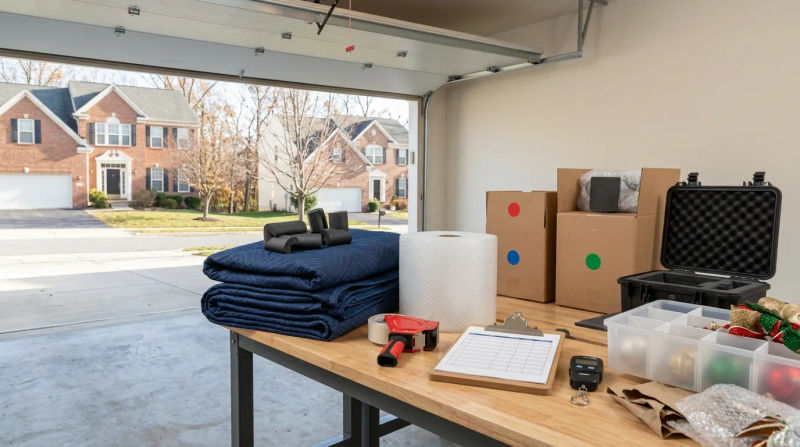
As a Senior Moving & Logistics Specialist with over a decade of experience, I know that one of the first questions on every homeowner's mind is, "What is this going to cost?" It's a fair question, and when it comes to moving, the answer isn't just about the truck and the crew. A significant part of your budget and peace of mind involves understanding your options for protecting your belongings. This is especially true here in Clinton, where we handle moves for everything from large single-family homes to townhomes filled with cherished furniture and electronics.
With November upon us, many families are preparing for the holidays. This often means moving high-value items like new TVs, family heirlooms, and delicate decorations. Understanding your Clinton moving valuation options before the busy season is key to a smooth, worry-free relocation. My goal is to provide transparent information to help you make an informed decision about protecting your possessions.
Average Costs in Clinton
When we talk about cost in this context, we're not talking about the hourly rate for movers. Instead, we're focused on the cost associated with different levels of liability, or "valuation," that a moving company assumes for your goods. Federal law requires movers to offer two main options, and these standards are common practice for local moves as well.
1. Released Value Protection
This is the most basic, economical option because it is offered at no additional charge. However, it provides minimal coverage. Under Released Value Protection, the mover's liability is limited to 60 cents per pound per article.
- Cost: $0 (included in the standard moving rate).
- Coverage Example: If a 10-pound lamp worth $150 is damaged during the move, you would only receive $6.00 (10 lbs x $0.60). If a 150-pound sofa worth $2,000 is irreparably damaged, the coverage would be capped at $90.00 (150 lbs x $0.60).
For any released value protection Maryland move, this option is suitable for those who are moving items of lower monetary value or who have a separate insurance policy that covers their goods in transit. It's a choice that prioritizes upfront savings over comprehensive protection.
2. Full Value Protection (FVP)
This is the more comprehensive option and the one I typically recommend for peace of mind. With Full Value Protection, if any of your articles are lost, destroyed, or damaged during the move, the mover has the option to either:
- Repair the item to its pre-move condition.
- Replace it with a similar item of like-kind and quality.
- Make a cash settlement for the cost of the repair or the current market replacement value.
The full value protection cost Clinton MD is not a flat fee; it's based on the total value you declare for your entire shipment. A common industry calculation is around 1% of your shipment's declared value. You must declare a minimum value for your shipment, which is often calculated at several dollars per pound.
- Cost Example: For a typical 3-bedroom home in Clinton, the contents might weigh around 7,500 pounds. A moving company might require a minimum valuation of $6 per pound, resulting in a total declared value of $45,000. The cost for FVP would be approximately $450.
- If you declare a higher value of $75,000 for your belongings, the cost would be around $750.
This option gives homeowners significantly more security, knowing their belongings are covered for their actual value, not just their weight.
Factors That Affect Price
Understanding how mover insurance affects price (or more accurately, how valuation affects price) comes down to a few key variables. Your choices in these areas will directly impact your final moving quote.
- The Valuation Option You Choose: This is the biggest factor. Selecting the no-cost Released Value Protection keeps your upfront cost down but exposes you to more financial risk. Opting for Full Value Protection adds to the total cost but provides comprehensive coverage.
- Your Declared Shipment Value: With FVP, the higher the value you declare for your goods, the more you will pay for the protection. It's crucial to create a realistic inventory to avoid under-insuring your items or overpaying for coverage you don't need.
- Your Deductible Level: Many movers offer FVP with different deductible levels. Just like with car insurance, you can choose to have a $0, $250, or $500 deductible. Opting for a higher deductible will lower the upfront cost of your Full Value Protection plan.
- Items of Extraordinary Value: Do you own items worth more than $100 per pound, such as artwork, antiques, jewelry, or fine china? These must be specifically listed on the shipping documents. If you fail to declare them, the mover's liability will be limited. Properly declaring these items ensures they are covered under your FVP plan.
How to Get the Best Value
Getting the best value isn't about picking the cheapest option; it's about choosing the right level of protection for your specific needs without overspending.
- Do a Thorough Home Inventory: Before you even request a quote, walk through your home and make a realistic list of your belongings and their approximate replacement value. This will help you determine an accurate declared value for Full Value Protection.
- Consult Your Homeowner's Insurance Policy: Some homeowner's or renter's insurance policies provide coverage for your belongings while they are in transit or in temporary storage. Call your insurance agent to confirm what, if anything, is covered. This knowledge can help you decide if Released Value Protection is sufficient.
- Understand Valuation vs. Insurance: It's important to note that valuation is not the same as insurance. Valuation is the level of liability a moving company contractually agrees to assume. Separate moving insurance can be purchased from a third-party provider, which may offer different terms and coverage limits.
- Weigh Your Risk Tolerance: Look at your belongings. If you're moving older furniture with little monetary value, the risk is low, and Released Value Protection might be fine. If your Clinton home is filled with new furniture, expensive electronics, and irreplaceable items, the added cost of Full Value Protection is a smart investment in your peace of mind.
Questions to Ask Your Contractor
When you're vetting moving companies, don't be afraid to ask detailed questions about their valuation policies. A professional and transparent company will be happy to explain everything. Our crews at Johnson Moving are trained to walk customers through these options clearly.
- What are the specific terms of your Released Value and Full Value Protection plans?
- How do you calculate the cost of Full Value Protection?
- What are my deductible options, and how much does each one save me?
- What is your procedure for handling and documenting items of extraordinary value?
- If a claim needs to be filed, what does your process look like from start to finish?
- How is your liability affected if I choose to pack my own boxes?
Being armed with this information allows you to compare quotes accurately and choose a mover who provides the level of protection you're comfortable with.
Choosing the right valuation is a critical step in planning your move. It's about balancing your budget with your need for security. By taking the time to assess the value of your possessions and ask the right questions, you can ensure your belongings are protected every step of the way.
For a personalized estimate in Clinton that includes a clear breakdown of your valuation options, contact Johnson moving for a free consultation.